
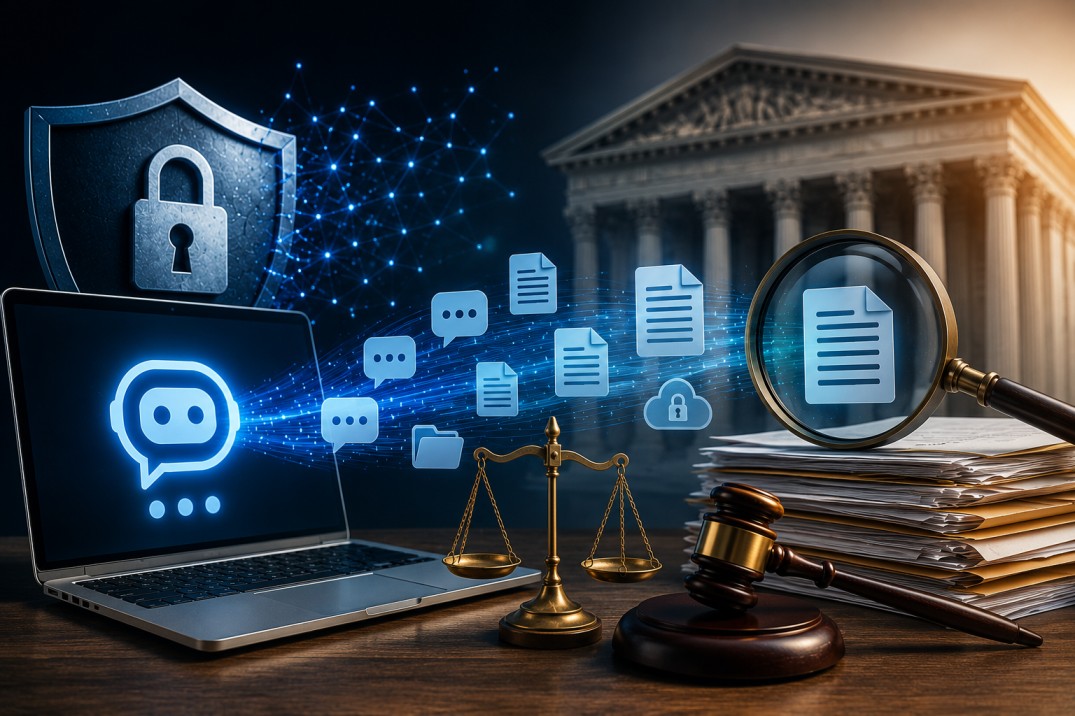
Every day, people with legal problems turn to artificial intelligence tools, including chatbots, AI search engines, and document generators before they ever call a lawyer. Those searches may feel private, but if you are (or later become) involved in a divorce, custody dispute, business lawsuit, employment claim, or any other litigation, your AI activity may not be private at all. It could become discoverable evidence. The law surrounding this issue is constantly changing, even since our first blog on the topic in July 2025.
Why your AI searches can become "discovery"
In litigation, each side can demand relevant information from the other side through a process called “discovery.” Those demands can include documents, messages, drafts, and other records. Click here to read more about financial discovery. AI tools often generate exactly that: a written record of what you asked, what you told the tool, and what it responded.
Even if you never posted anything publicly, your prompts and outputs may still exist in accounts, logs, synced devices, browser histories, or third-party systems. If a court orders production, you may have to turn over those materials.
Attorney-client privilege may not protect independent AI use
Attorney-client privilege is meant to protect confidential communications between a client and a lawyer for the purpose of obtaining legal advice. Consumer AI tools are not your lawyer, and your communications may not be confidential in the way privilege requires.
Any voluntary disclosure of privileged communications to someone outside the attorney-client relationship can waive the privilege. When you upload documents, share legal questions, case facts, or strategy with a third party, you may be creating evidence that is not privileged-and you may be undermining privilege arguments later. There are limited exceptions but those do not include AI tools.
AI technology is evolving quickly, and courts are actively confronting new questions about confidentiality, third-party access, and what must be produced in discovery. What is "safe" today may not be safe tomorrow.
Practical guidance for clients
- Do not use consumer AI tools to "test" legal arguments, draft statements, or summarize sensitive facts about your case.
- Do not paste or upload attorney emails, legal advice, settlement positions, or draft certifications/affidavits into an AI chatbot.
- If you have already used AI, tell your lawyer early so we can assess risk, preservation obligations, and strategy.
- If you believe AI assistance is necessary for your case (e.g. translation, organizing records or drafting support), do not choose or use an AI tool on your own. Ask your attorney first so that if any tool is used, it is under counsel’s direction and with more confidentiality safeguards.
- Do not delete, “auto-delete” or try to scrub AI chats, prompts, outputs or related records once a dispute is reasonably foreseeable. Preserve them and tell your attorney immediately.
Because privilege and waiver rules are rapidly developing in response to new technology, you should avoid using consumer AI tools for case-specific research or drafting and should consult counsel promptly about any prior AI use. If you have questions about AI, privacy, and your case, contact our office before you search.