
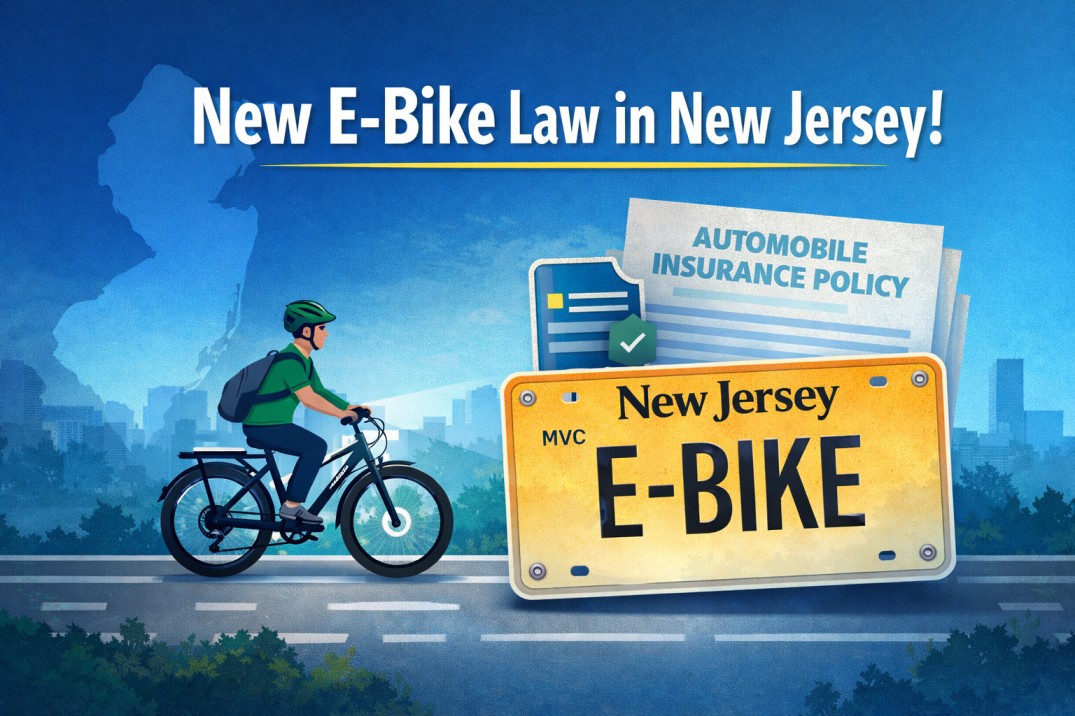
On January 19, 2026, outgoing New Jersey Governor Phil Murphy signed landmark legislation (S4834/A6235) that significantly updates the state’s electric bicycle (e-bike) laws. This marks the first major e-bike regulatory overhaul in six years and brings some of the most comprehensive e-bike rules in the nation into effect.
The new statute aims to address rising safety concerns after a number of serious and fatal crashes involving e-bikes statewide. Supporters say updated regulations are necessary to protect riders, motorists, and pedestrians alike, while critics — including bicycle advocacy groups — argue that the requirements are overly restrictive and could limit the accessibility and utility of e-bikes in New Jersey.
Key Legal Changes Under the New Law
Under the new law, New Jersey now regulates e-bikes through the Motor Vehicle Commission framework applicable to (i) “low-speed electric bicycles” and (ii) “motorized bicycles.” In general, pedal-assist-only, low-speed e-bikes fall into the “low-speed electric bicycle” category, while throttle-equipped and/or higher-speed e-bikes are treated as “motorized bicycles.” Both categories are now subject to licensing, registration, and insurance-related requirements when operated on public roads.
Riders and owners should be aware of these major requirements:
Licensing Requirements
- Riders must be licensed: E-bike operators need a valid driver’s license to ride. Alternatively, individuals age 15 or older may obtain a motorized bicycle license through the New Jersey Motor Vehicle Commission (MVC).
- Riders under 15 are not permitted to operate an e-bike under the new law.
Registration
- Applicable e-bikes must be registered with the MVC before operation on public roads.
- Like other motorized vehicles, these registrations help law enforcement and insurers track ownership and safety compliance.
Insurance Obligations
Grace period: The law took effect on January 19, 2026, but provides a six-month window for riders to obtain newly required insurance (where applicable), registration, and licensing.
Fee waiver: For one year following the effective date, the MVC is directed to waive certain examination, registration, and licensing fees for low-speed electric bicycles and motorized bicycles.
- E-bike owners must carry liability insurance, similar to what’s required for other motorized vehicles.
- Insurance requirements are intended to ensure that victims of accidents involving e-bikes have recourse for damages.
Motorist Responsibilities
- The law also imposes obligations on motor vehicles sharing the road with e-bikes, including maintaining safe passing distances and slowing when necessary.
Timeline for Compliance
While the bill has officially been signed into law, specific implementation timelines and MVC guidance on registration, licensing, and insurance requirements are expected to be clarified in the coming weeks. Riders should stay tuned to the MVC for deadlines and application procedures
What This Means for Riders and Businesses
For Riders
- Traditional low-speed commuter e-bikes are now treated similarly to mopeds or motorized bicycles for regulatory purposes.
- If you ride an e-bike in New Jersey, you must plan ahead to obtain a license, register the bike, and secure insurance coverage before operation.
- This does not include e-scooters (low-speed electric scooters), which are treated differently than e-bikes under this new legislation. E-scooter riders are not treated as “pedestrians” either, for New Jersey PIP purposes, and are generally not eligible for PIP benefits as a pedestrian if struck by a motor vehicle.
For Retailers and Manufacturers
- Retailers will need to reassess sales and compliance guidance for customers purchasing e-bikes in or shipping to New Jersey.
- Online sales of certain high-speed or powerful electric bicycles may face additional restrictions in the immediate future.
Broader Context
This legislation has generated significant debate. Supporters highlight the safety benefits of clearer regulatory standards as e-bike use grows, especially in urban and suburban communities. Opponents counter that treating e-bikes like motor vehicles may discourage sustainable transportation options and impose unnecessary burdens on everyday riders.
If you have questions about this new legislation or have been injured in an e-bike accident, contact us today.